


When an asset is sold or retired, both its original cost and total journal entry to record depreciation accumulated depreciation are removed from the accounts. From the view of accounting, accumulated depreciation is an important aspect as it is relevant for capitalized assets. However, the company’s cash reserve is not impacted by the recording as depreciation is a non-cash item. Therefore, the cash balance would have been reduced at the time of the acquisition of the asset. The journal entry is a debit to Depreciation Expense and a credit to the contra asset Accumulated Depreciation. Some assets, such as machinery used in production, are depreciated based on the number of units produced.
- It’s useful for assets that lose value faster when they’re new, like technology or machinery.
- Depreciable assets include buildings, machinery, vehicles, furniture, and equipment—essentially, tangible assets with a useful life of more than one year.
- Company needs to pay to acquire the fixed assets but it will be consumed over the period of time which is more than one year.
- As an accountant you record depreciation as an expense on the income statement, reducing the net income and the earnings per share.
- This is a table that shows the annual depreciation expense for an asset over its useful life.
- If you depreciate your assets at the end of the financial year, make this step a part of your end-of-year routine.
Learn more about depreciation journal entries
Based on the experience, company will depreciate it using a straight line with a useful life of 4 years. With this method, your monthly depreciation Accounting for Technology Companies amount will remain the same throughout the life of the asset. Calculating depreciation will differ depending on the method of depreciation you’ve chosen. Check out this video to see how journal entries are implemented with HAL Accounting Software. “Depreciation account” is credited to transfer depreciation into the P&L account. Sometimes referred to as PPE (Property, Plant & Equipment), they are physical items held for use to operate a business.
- It is important to note that the depreciation expense reported on the tax return is not necessarily the same as the depreciation expense reported on the financial statements.
- Always make sure you’re updating your depreciation entries at the end of each accounting period, whether that’s monthly, quarterly, or annually.
- We simply record the depreciation on debit and accumulated depreciation on credit.
- Some firms calculate depreciation from the middle of the month of purchase.
- Fixed assets are long-term assets that are used in the production of income, such as machinery, equipment, buildings, vehicles, furniture, and plant and machinery.
- The accounting for depreciation requires an ongoing series of entries to charge a fixed asset to expense, and eventually to derecognize it.
Depreciation Methods in Detail
MACRS is a depreciation method that allows businesses to recover the cost of an asset over a specified period. The period over which an asset is depreciated depends on the asset’s class life. The generally accepted accounting principles (GAAP) require that companies use a consistent and appropriate method to calculate depreciation. This ensures that the financial statements accurately reflect the value of the assets and the performance of the company. A depreciation journal entry is used at the end of each period to record the fixed asset or plant asset depreciation in the accounting system.
What assets can be depreciated?
- This is important for accurate financial reporting and compliance with…
- In this method, the asset account is charged (credited) with depreciation.
- To calculate depreciation using the straight-line method, you divide the cost of the asset by its useful life.
- By leveraging HighRadius’ technology, businesses can enhance their financial processes, ensuring accurate and timely journal entries that support overall financial health.
- However, there might be instances when the market value of a one-year-old computer may be less than the outstanding amount recognized in the balance sheet.
- The depreciation is calculated and recorded as an expense in the profit or loss statement.
The units of production method ties depreciation to how much the asset is used instead of how long you’ve had it. It’s a great fit for equipment or machinery where wear and tear depends on activity rather than time, such as manufacturing robots or printing presses. Now you’re ready to record the depreciation journal entries for the period. This post will delve into the specifics of depreciation expense journal entries, where and how to record them, and how they impact financial statements. When a fixed asset is acquired by a company, it is recorded at cost (generally, cost is equal to the purchase price of the asset). This is know as “depreciation”, and is caused by two types of deterioration – physical and functional.
Recognizing Gain or Loss on Sale
When an asset is sold, discarded, or retired, a journal entry must be recorded to account for its disposal. An accelerated depreciation method that expenses more in the earlier years. LiveCube further allows users to do a one-time set up automation for journal entry postings. Journal Entries can also be customized based on individual system records. Integrating this with LiveCube can enable manual preparation of Journal Entries using templates where all company data is auto-populated.
Benefits of Depreciation Accounting Entry
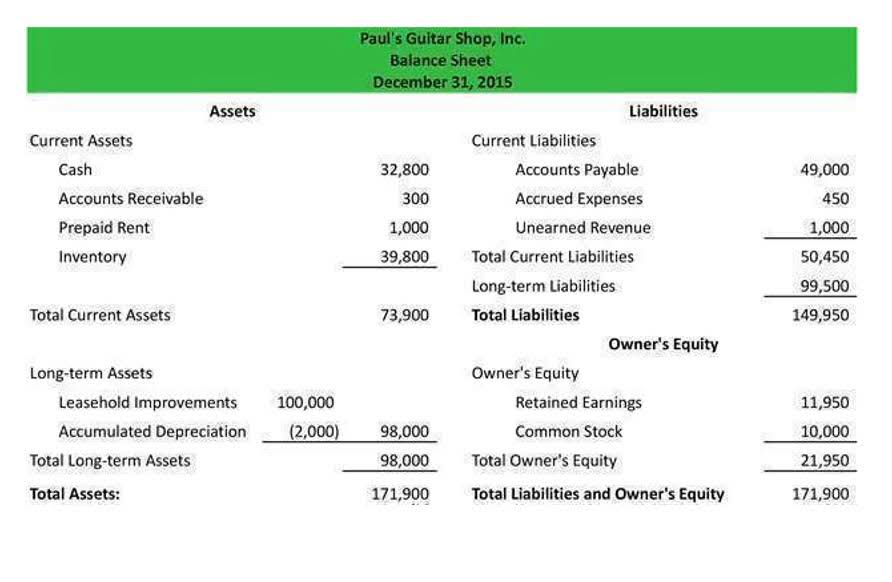
It’s critical for accurate financial reporting and valuation of the company. The matching principle requires expenses to be recognized in the same period as the revenues they help produce. Since long-term assets contribute to revenue over many years, charging their full cost upon purchase would distort financial results, understating profit initially and overstating it later. Depreciation aligns a portion of the asset’s cost with the revenues earned each period, offering a clearer picture of profitability. It is also possible to deduct the accumulated depreciation from the asset’s cost and show the balance on the balance sheet.
- They might charge ₹4,000 in depreciation during the first year, and then a smaller amount the next year.
- MACRS is a depreciation method that allows businesses to recover the cost of an asset over a specified period.
- Accrued depreciation helps lower the book value of your assets on the balance sheet.
- Understanding how carrying cost and market value differ helps businesses make informed decisions about asset management, such as when to sell or replace an asset.
It reflects the fact that assets lose value over time due to wear and tear, obsolescence, or other factors. Depreciation is an important concept in accounting, as it affects the income statement, the balance sheet, and the cash flow statement. And in this blog post we will go through the Journal Entries for Depreciation. The assets = liabilities + equity method of depreciation used depends on the type of asset and the company’s accounting policy. By understanding the different methods of depreciation, companies can accurately allocate the cost of their assets over their useful lives.


